Open ESPN, CBS Sports or NCAA when you know which scoreboard you want. When you know only the matchup, start by choosing the game’s date and competition level. A search for college football scores today often returns a weekly board, and the first screen can show a subset of the games. Checking the selected week and group before scrolling will usually get you to the right row faster.
Which College Football Scoreboard Should You Open?
Use the following routes depending on what you came to check. For an ESPN game story or box score, start with ESPN. For a conference slate and a choice between all FBS games and the Top 25, CBS Sports offers labeled group filters. To move between levels of NCAA football, start with the division on NCAA.com.
| Destination | Start here when | What to inspect before you scan |
|---|---|---|
| ESPN college football scoreboard | You want ESPN's result or a route to its game coverage. | Open its FBS scoreboard for a broader FBS lookup and check the season and week. |
| CBS Sports FBS scoreboard | You want a weekly list with a visible group selection. | Look for All FBS Games, Top 25, All FCS Games or the conference you mean. |
| NCAA FBS scoreboard | You want to start by division and then narrow to a conference or week. | Confirm that FBS is selected. FCS, DII and DIII have their own scoreboard views. |
| College Football Schedule scores | You remember the date and want the Eastern Time fixture list. | Choose the date or Yesterday and check whether you want All, FBS or AP Top 25. |
Suppose you are looking for a late result from an unranked Mid-American Conference team. It makes sense to start with the FBS view or choose the Mid American filter on CBS. If you started with Top 25, check the broader group before concluding that the game is absent. If you are following an FCS rivalry, switch the division first. A conference name is useful only after you have chosen a board that covers that level.
Opening the right board also changes what you should expect to see. A game marked final is the place to check a completed result. A scheduled card may show a kickoff, network or venue before it has any score. If you are deciding whether you can watch a game, confirm the channel in the schedule. If you want to know who won, stay with the result and open the game detail when the status is unclear. These are different lookups even when they start with the same two team names.
Follow the Same Game Across ESPN, CBS Sports and NCAA
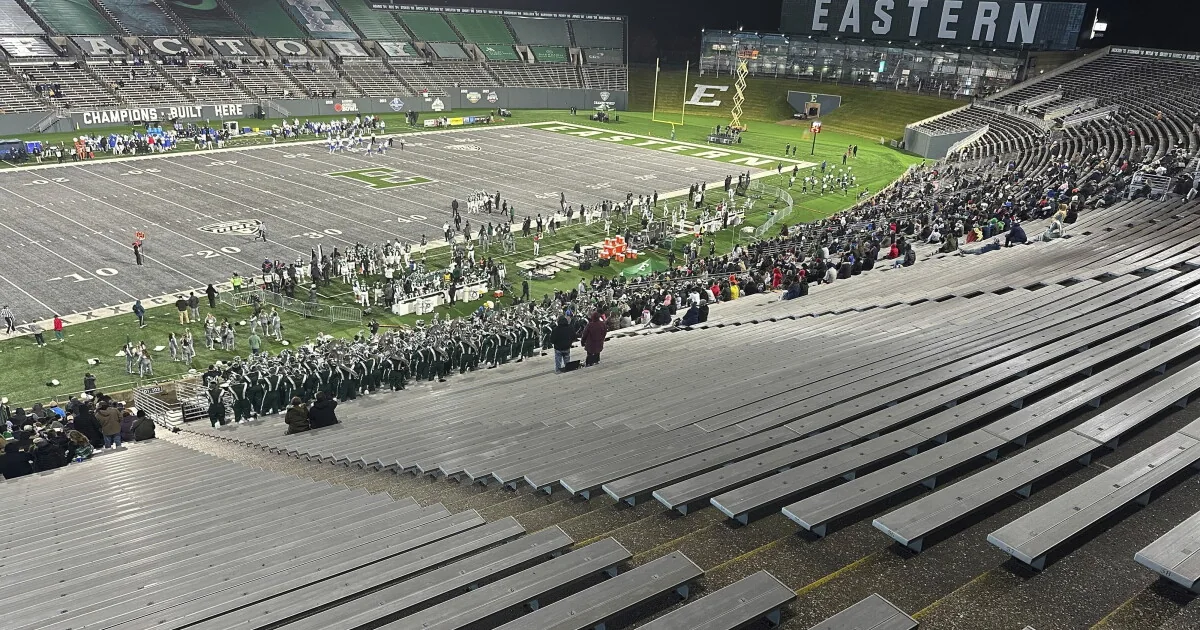
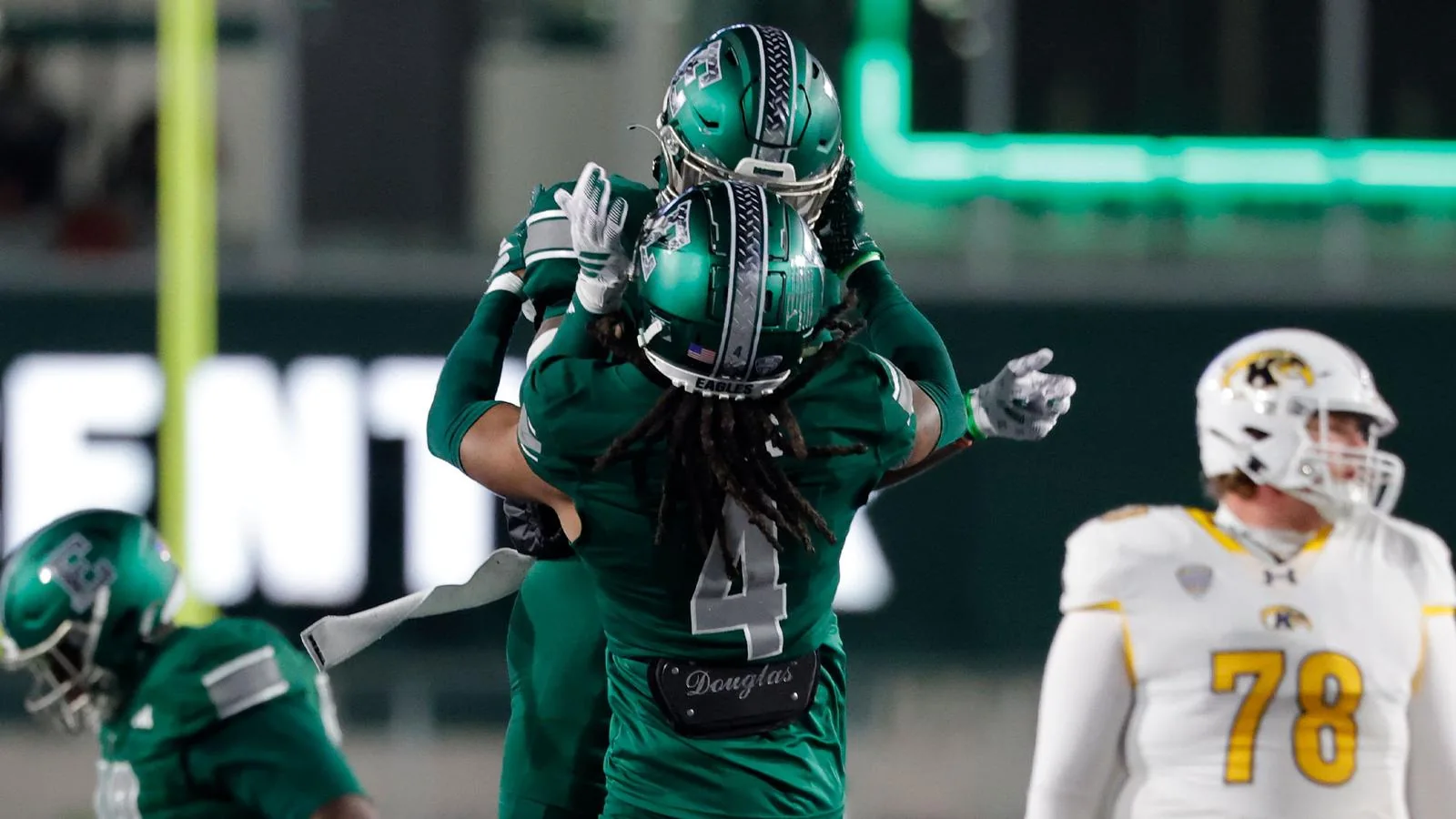
Use Kent State at Eastern Michigan as a test case. The game kicked off Tuesday, November 24, 2026, at 7 p.m. Eastern at Rynearson Stadium in Ypsilanti. Eastern Michigan won 17–12. It is a useful example because the exact matchup turns up under two different day headings, depending on which clock is used, and the final score leaves out a decisive replay ruling. Start with the Week 13 scores and follow the Kent State at Eastern Michigan row.
What the Scoreboard Row Can Confirm
| Source | What identifies the game | Where to go next |
|---|---|---|
| ESPN | Its public game record lists Kent State at Eastern Michigan as Final, with 12 points for the visitors and 17 for the home team. The recorded kickoff timestamp is midnight UTC on Nov. 25. | Gamecast or the ESPN box score. |
| CBS Sports | Look in the Week 13 FBS view for Kent St. and E. Michigan. The completed-game listing offers a recap and box score. | CBS GameTracker box score. |
| NCAA | The UTC version of the FBS board places the Final, Kent St. 12 and Eastern Mich. 17, under Nov. 25. That is the same fixture as the Nov. 24 game in Eastern Time. | FBS scores with Week 13 selected. |
| Eastern Michigan | The school lists the game date as Nov. 24 and gives the totals and scoring by quarter. | Eastern Michigan Athletics box score. |
The stable identifiers are the two teams and where they played. Once those match, compare the status and each team’s points. “E. Michigan” and “Eastern Mich.” are different labels for the same school. A score shown in away–home order may read 12–17, while the winning team’s recap calls it a 17–12 win. Read each number beside its team before interpreting the order of the two scores.
Where the Box Score Adds Context
The quarter line shows Eastern Michigan led 14–12 at halftime. Neither team scored in the third quarter, and Eastern added a field goal in the fourth. That explains the margin and when it changed. The play-by-play and the conference’s statement answer a further question the quarter totals leave open. Kent State’s late apparent go-ahead touchdown was called back after a replay review. The following day, the MAC said the video evidence was insufficient to reverse the original on-field ruling. The official result remained Eastern Michigan 17, Kent State 12. Read the recorded scoring in the Kent State box score and the ruling in the MAC’s Nov. 25 statement.
That is why a result check and a game explanation belong at different levels. The scoreboard settles the recorded winner once the result is final. The box score tells you how points accumulated. A league or school statement can explain the ruling that shaped the outcome. If someone shares a clip of a touchdown from the closing seconds, the clip needs that context before it can tell you who won.
Why FBS and Top 25 Show Different Games
FBS is the Football Bowl Subdivision. The NCAA’s Division I overview treats it separately from FCS, the Football Championship Subdivision. Fighting for a conference title, appearing on national television or having a winning record does not by itself put a team in the Top 25. The FBS view answers which group of teams you want to follow. A Top 25 view narrows the slate by ranking.
The difference is visible in the example above. Kent State at Eastern Michigan appeared on the CBS Week 13 FBS board when we checked the Nov. 24 final. The game was absent from the Week 13 Top 25 board. Both listings covered the same week. Changing the group was sufficient to recover the matchup without entering the score in a search engine or scrolling through another weekend.
In the College Football Schedule FBS filter, a game can qualify when only one participant is an FBS team. That matters when an FBS school hosts an FCS opponent, especially around the opening weeks. Look for a scope description before assuming that every provider handles a crossover the same way. If you cannot find a game, try the broader board and then search by team. Check the stadium or opponent name if there are several schools with similar labels.
Our AP Top 25 score filter also looks at either participant. An unranked challenger can appear alongside a ranked favorite. That is a game involving a ranked team. A ranked-versus-ranked game requires both teams to appear in the same named poll edition. The distinction matters when selecting games to watch, particularly in weeks with a long schedule and only a few meetings between ranked teams. Use the Top 25 schedule to pick upcoming ranked games and the score page to confirm results by date or week.
Check Which Poll Supplies the Number
A scoreboard may attach a ranking to the school name. Read the ranking key where it is available. The number could reflect the AP poll, the College Football Playoff selection committee or a separate publisher’s choice. It may also remain tied to the poll in use when the game was played. In November 2026, for example, Ohio State was No. 25 in the November 22 AP poll and No. 21 in the November 24 CFP rankings. The two numbers refer to separate evaluations of the same team.
When you pass an old score to someone else, record the poll name and edition alongside any ranking you mention. A Sunday poll can change the number printed next to a team even though Saturday’s score stays the same. A useful comparison starts with the AP, Coaches and CFP rankings side by side. Then return to the matchup to see which result you are discussing. If a board does not identify the poll, report the score and use the original poll release for the rank.
How to Find Yesterday’s College Football Scores
Start by turning “yesterday” into a calendar date. On the College Football Schedule scoreboard, Yesterday is the previous calendar day in Eastern Time. It keys off when the game was scheduled to start. A game that begins Saturday night can still belong to Saturday after the final whistle comes on Sunday morning. The time of a recap or a notification can be later than either the kickoff or the finish.
For an exact date, use the date control and choose All or FBS before narrowing to AP Top 25. During the November 26, 2026 check, Yesterday showed November 25 in Eastern Time. Entering Tuesday, November 24 brought back the two MAC finals, including Miami (Ohio)’s 28–24 win at Western Michigan and Eastern Michigan’s 17–12 win over Kent State. Looking back one date farther was enough to find both games. The same fixtures were available under Week 13, which makes the week view useful if you remember the opponent but have the date wrong.
A timezone can move even the published kickoff across a date boundary. ESPN’s Week 13 release listed TCU at Texas Tech for Thursday, November 26 at 8 p.m. Eastern. The NCAA Week 13 scoreboard displayed that kickoff as 1 a.m. UTC on Friday, November 27. If you only looked at the weekday, one page would seem to be a day ahead. Checking the time labels and both team names identifies one scheduled kickoff.
When you know the teams but the first search returns a broad scoreboard, use this sequence.
- Write down the date in the timezone the source is showing. For a U.S. game listed near midnight UTC, check the previous Eastern date as well.
- Switch to the correct season and week on a weekly board. Around a season opener, a holiday or the postseason, trust the displayed date range over an assumed Saturday-to-Saturday schedule.
- Search the entire relevant group for both team names. Open ESPN’s FBS landing page if you started with a narrow slate. In the CBS FBS view, find the week and then check the group label.
- Open the game and read the status. If the event is still underway or delayed, check the next update before quoting a final.
When sending a score to a friend, include the game date, the away and home teams, the final status and a game link. On a quiet midweek date an empty list may be accurate. If you remember a broadcast from that evening, check nearby date headings, the wider week and the appropriate division before deciding that the game is missing. For a replay or rebroadcast, a TV listing dated today can still be referring to a game played weeks earlier. The event’s original date belongs in your result lookup.
What to Check When Two Scoreboards Disagree
Put the two game pages side by side and check the full matchup first. A search for Miami football might lead to Miami (Ohio) or Miami (Florida). A search for a rivalry without the season can pull up last year’s final. Once you have the same opponent, home or away designation and kickoff date, compare the status and period above each score. A live or halftime figure answers where the game stood at the recorded moment. Final marks the completed result. A dash in the site’s score column means a score is unavailable. When a status reads delayed, postponed or canceled, follow the team or conference notice for the schedule decision.
A score at the end of the fourth quarter can be correct and still be incomplete. Michigan and UCLA were tied 10–10 through regulation on Nov. 21, 2026. They traded field goals in the first two overtimes before Michigan won 18–16 in the third. The Michigan Athletics box score breaks out the overtime periods, and the team’s postgame notes identify the decisive two-point pass. In a matchup like this, reporting a 10–10 score as final would omit the overtime result. Look for the completed status and check whether the line score includes overtime columns before settling a disagreement.
Check the page’s update context while a game is in progress. The College Football Schedule results page refreshes twice daily and shows a last-sync label when available. For a live drive, use a game page with play-by-play and read the quarter and clock beside the score. If both sites display Final yet the points differ, check the official school box score for the same date and compare the lines by team. Use the conference’s statement if one addresses the result or an officiating decision. You can then say exactly what the game record shows and which source confirms it.
Keep the channel check separate. A board’s game record and the television assignment can come from different places and change at different times. For Miami (Ohio) at Western Michigan on Nov. 24, the Miami game preview and the ESPN release both listed ESPN2 at 7 p.m. Eastern. The same channel appeared in the Week 13 site listing. That gives you a reproducible way to verify what aired without inferring a channel from the name of the scoreboard. For an upcoming game, use the college football TV schedule and the current school or network announcement. Leave the channel as TBA while the assignment is pending.
The useful record to keep is short. Save the matchup, the kickoff date and timezone, the points beside each team, the completed status and one game link. Add the poll and edition only if the ranking matters. Add the network only if you checked the broadcast separately. Those details let you recover the same game later, even when a homepage defaults to a different week or a result is filed under the next day in UTC.
Loading comments...